
Music Keyboard Buying Guide: How to Choose the Right One for You

Whether you're learning your first chords, composing film scores, or performing on stage, music keyboards offer a world of creative possibilities in a single, versatile instrument. With features that range from simple built-in tones to advanced digital workstations, they’ve become a cornerstone in home studios, classrooms, and live setups alike.
At Music Planet, we stock a diverse selection of keyboards to meet every musical goal and budget—from entry-level models with learning tools to professional workstations. In this guide, we’ll help you explore the different types, understand key features, and match the right keyboard to your skill level and needs.
Types of Music Keyboards
Portable Keyboards
These lightweight, compact instruments are perfect for beginners and casual musicians. They often include built-in rhythms, tones, and learning features like key lighting or chord guides. While they may not have weighted keys, they’re easy to transport and ideal for home practice
Best for: Beginners, kids, and anyone looking for an affordable, fun introduction to keyboard playing.
Arranger Keyboards
Arranger keyboards feature auto-accompaniment styles, allowing players to perform with a full backing band. They’re ideal for solo performers or composers who want to sketch songs quickly with rhythm and harmony.
Best for: Singer-songwriters, church musicians, and live entertainers who want versatility and backing features.
Digital Pianos
These focus on replicating the acoustic piano experience, with weighted keys, realistic sound engines, and minimal distractions. Many models include built-in speakers and headphone jacks for silent practice.
Best for: Pianists who want a home or stage instrument that feels like an acoustic piano without the size and maintenance.
Workstations
Workstation keyboards are powerful tools for composers, producers, and performing artists. They combine multi-track recording, synthesizer engines, and extensive sound libraries in one unit.
Best for: Advanced users who compose, arrange, or perform live using layered sounds and custom setups.
MIDI Controller Keyboards
MIDI controllers have no built-in sounds but send signals to external devices or DAWs (digital audio workstations). They're ideal for studio setups and electronic music production.
Best for: Producers and DJs who work primarily with software instruments and virtual synths.
Choosing the right keyboard for your needs
Learning at Home
For beginners, a keyboard should be intuitive, engaging, and supportive of the learning process. Look for features like touch-sensitive keys to help develop dynamics, built-in lesson modes, and interactive displays. Additional tools such as key lighting systems, metronomes, and demo songs make practicing more effective and enjoyable, especially for self-taught players.
Live Performance
Stage performers need keyboards that combine reliability, fast navigation, and a broad sound palette. Instruments with performance presets, assignable controls, and layer/split capabilities allow players to move seamlessly between patches mid-song. 88-key weighted or semi-weighted actions, multiple audio outputs, and sturdy construction are also essential for consistent gigging.
Home Recording and Production
Producers and composers working in home studios benefit from keyboards that offer high-quality sounds, MIDI/USB connectivity, and built-in sequencing tools. Whether you're using the keyboard as a standalone workstation or a controller for your DAW, features like realistic key action, extensive sound libraries, and internal recording functions help transform inspiration into polished tracks.
School or Teaching Environments
In educational settings, keyboards must be durable, easy to operate, and versatile. Look for models with split and dual modes (to allow student and teacher to play side by side), built-in speakers, and clearly labeled controls. For younger students, key lighting can be a powerful motivator, while transpose and octave shift functions support classroom arrangements and group learning.
Songwriting and Composition
For songwriters, an arranger keyboard or workstation provides the ideal creative tool. With automatic accompaniment styles, chord recognition, loop creation, and layered sound options, these keyboards make it easy to sketch ideas quickly. The ability to save and recall arrangements, control dynamics, and experiment with instrumentation helps bring full song structures to life without needing a full studio setup.
Key Features to Consider
Number of Keys
Keyboards range from 25 to 88 keys. Full-size 88-key models mimic acoustic pianos, while 61- or 76-key versions are more portable and sufficient for most genres.
Why it matters: More keys give you greater musical range and expression.
How it varies: Beginners may prefer 61-key models for portability, while pianists will want 88-key weighted action.
Key Action and Touch Response
Keyboards may feature synth-action (light and springy), semi-weighted, or fully weighted keys that simulate an acoustic piano. Touch response allows dynamics—playing harder for louder notes.
Why it matters: Realistic action helps with technique and musical expression.
How it varies: Higher-end models offer hammer-action keys, while entry-level keyboards focus on lighter, easier playability.
Sound Engine and Tones
The quality and variety of built-in sounds define how authentic and inspiring a keyboard feels. Look for sample-based engines or physical modeling in advanced keyboards.
Why it matters: Richer sounds lead to a more enjoyable playing and composing experience.
How it varies: Entry-level keyboards may have 100–600 sounds, while pro models offer thousands, including orchestral, synths, and drum kits.
Connectivity Options
USB, MIDI, audio outputs, pedal inputs, and Bluetooth expand the keyboard’s usability for recording, live sound, or educational apps.
Why it matters: Connectivity enhances flexibility and integration with modern workflows.
How it varies: Some models offer USB-to-host and Bluetooth MIDI, while others add audio interface capabilities or DAW control.
Built-in Learning Tools
Key lighting, chord guides, metronomes, and lesson modes can accelerate the learning process—especially for self-taught musicians.
Why it matters: These features provide instant feedback and motivation.
How it varies: Casio’s lighted keys or Medeli’s lesson functions offer beginner-friendly paths to progress, while pro workstations focus more on performance tools.
Recommendations by Skill Level
Keyboards for Beginners
Medeli MK100 61-Note Keyboard with Touch Response
View Product
Affordable and packed with features, the MK100 has hundreds of tones, rhythms, and a clear display that makes it easy to learn and explore. Great for students and casual players alike.
Casio LK-S450 Casiotone 61-Note with Key Lighting
View Product
This light-up keyboard is ideal for total beginners. It includes intuitive learning tools, USB connectivity, and great sound quality in a lightweight, portable design.
Keyboards for advanced level musicians
Korg Kross 2 88-Key Workstation in Matte Black
View Product
A fully-featured synth and workstation with deep editing capabilities, 88-key weighted action, and thousands of sounds. Ideal for stage performers, composers, and advanced producers.
Korg Krome EX 88-Key Workstation Weighted
View Product
With studio-ready sounds, powerful sequencing, and responsive hammer-action keys, the Krome EX is a professional’s dream for both live and studio use.
Popular Brands at Music Planet
Korg
Korg is known for cutting-edge technology and professional instruments. Their workstations and synthesizers are staples in live performances and music production worldwide.
Target Audience: Advanced players, producers, and performers seeking performance depth and sound design tools
Medeli
Medeli offers budget-friendly keyboards with solid features and intuitive design. Their models are popular in schools and with self-taught musicians for their versatility and durability.
Target Audience: Beginners, educators, and hobbyists who want affordable quality and ease of use.
Nektar
Nektar specializes in MIDI controllers with deep DAW integration. Though not standalone instruments, their keyboards are essential for producers using software-based studios.
Target Audience: Electronic musicians, beatmakers, and home studio producers.
Casio
Casio strikes a balance between innovation and accessibility. Their keyboards often include lighted keys, portable designs, and built-in learning features, making them a favorite among new learners.
Target Audience: Beginners and casual players who want fun, educational tools in a sleek, affordable package.
Accessories: What You Might Need with Your Keyboard
Keyboard Stands
A stable stand is essential for proper playing posture and setup flexibility. Choose an adjustable, collapsible stand that matches your keyboard’s weight and size.
Benches or Stools
A padded bench or stool helps maintain comfort and ergonomics during longer playing sessions. Look for adjustable height models to ensure the proper hand position.
Pedals
Sustain pedals enhance realism when playing piano pieces. Many keyboards are compatible with standard 1/4" jack pedals—opt for one with solid construction and polarity switch if needed.
Headphones or Monitors
Quality headphones allow silent practice with detailed sound, while monitor speakers are ideal for home studios and performance. Closed-back headphones are great for focus and isolation.
Power Supplies and Adapters
Always check if a power supply is included. Having a backup adapter or using a universal model can be a lifesaver for gigs or travel.
Final Tips Before You Buy
A music keyboard can be your gateway to creativity, performance, and musical growth. Consider your goals—whether it's learning your first songs, producing beats, or performing live—and choose a model that matches your vision and comfort level. Don’t be afraid to start simple and grow into your instrument as your skills evolve.
At Music Planet, we’re passionate about helping musicians at every stage. Explore our full range online or visit a store to test out models in person. Your next musical adventure starts with the right keyboard.
People Also Read
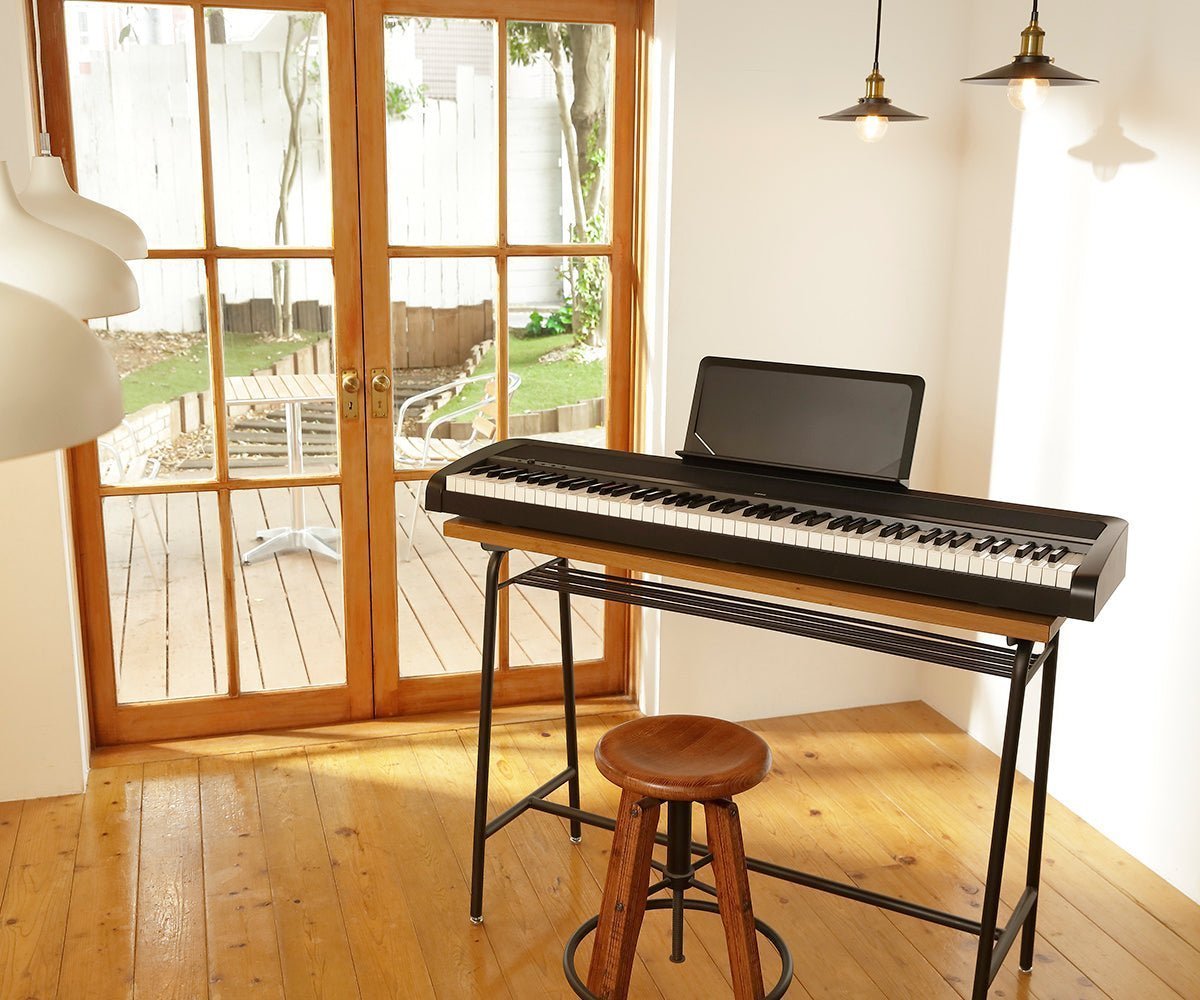
Digital Pianos Under $1000
Discover top digital pianos under $1,000 at Music Planet—like the sleek Korg L1 Liano and feature-rich Casio CTX800. Affordable, stylish, and ready to elevate your music.

Ukulele Buying Guide: How to Choose the Right One for You
From first chords to stage-ready strumming, the ukulele is a joyful companion for any player. At Music Planet, we’ve handpicked top ukuleles for all levels—soprano to tenor, beginner to pro. Explore our guide to find the perfect match for your sound and style.

Studio Synthesizer Buying Guide: How to Choose the Right One for You
From gritty bass to lush soundscapes, synthesizers shape the sound of modern music. At Music Planet, we’ll help you find the right synth for your style, whether you're just starting out or deep into sound design. Explore our guide and unlock your creative potential.
Frequently Asked Questions
Have a Question? We’ve Got the Answer!